Record what changes your next decision
Start with the date, exercise variation, working load, and completed reps for each set. Save the routine you intended to follow, but keep planned reps separate from the reps you actually completed. A plan saying 3 × 8 is different from a result of 8, 7, 6.
Add a short note when setup, rest, effort, or discomfort changes the meaning of the numbers. You do not need a diary between every set; write the detail that will help you understand the session next time.
- Track working sets separately from warm-ups.
- Identify the equipment and exercise variation.
- Record reps immediately after the set when practical.
Choose a consistent weight convention
For a barbell, record the total load including the bar. For two dumbbells, use either the weight per hand or the combined weight and keep that convention consistent. A note such as ‘per hand’ removes ambiguity when you revisit the log.
Machine labels are specific to the equipment: pulley ratios and lever arms differ. If you change machines, record the change instead of treating the same stack number as the same resistance. For assisted pull-ups, record assistance separately from added weight. Less assistance is a different progression signal from a heavier weighted pull-up.
Count unilateral and alternating reps clearly
A split squat target of 10 reps usually means 10 per leg. An alternating curl log of 20 total movements could mean 10 per arm. Choose a counting convention, identify it in a note, and keep it consistent.
Keep your range and technique repeatable too. Reps performed with a shorter range or more momentum are different records, even if the load and count look identical.
Log while you train
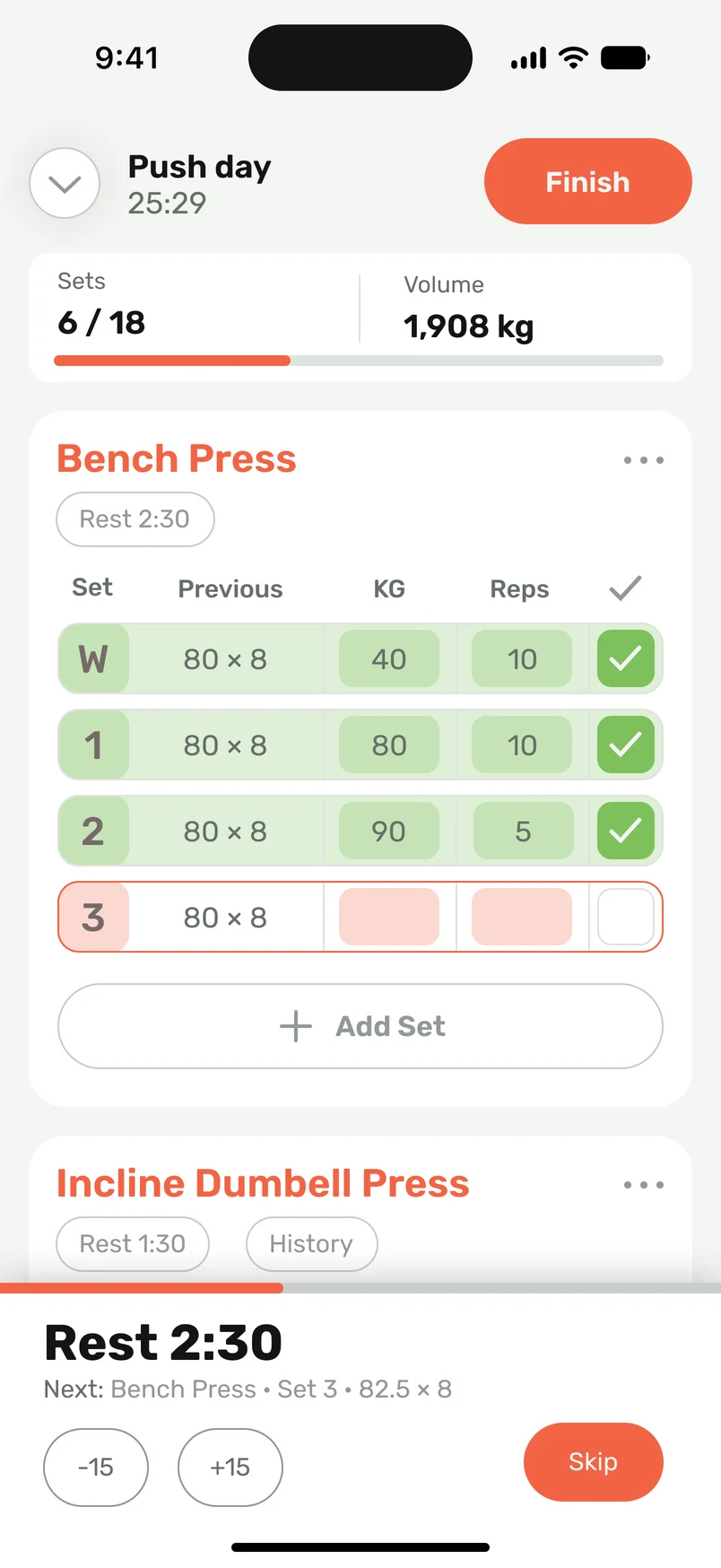
Open the saved routine and check the previous performance before the first working set. After each set, enter the actual load and reps, mark it complete, and use your rest period for any short note. This avoids reconstructing all the numbers at the end of the workout.
Harda keeps previous exercise results beside your current entries and includes automatic rest timers. Use the actual result rather than copying the planned target when a set differs.
Review trends before changing the plan
Compare several similar sessions. Look for repeatable improvements in reps, load, and control before deciding the routine needs a change. Note when exercise order, equipment, or rest makes a comparison less useful.
If the same lift keeps stalling, examine recovery, training demand, and whether the next load jump is manageable. A log helps reveal a pattern; it does not diagnose an injury or guarantee a particular result.
A short, useful log
| Exercise | Load | Set reps | Context |
|---|---|---|---|
| Bench press | 60 kg total | 8 / 8 / 7 | Same bench and setup |
| Incline dumbbell press | 20 kg per hand | 10 / 9 / 8 | Moderate incline |
| Pull-up | Bodyweight | 6 / 5 / 5 | Controlled reps, no assistance |
Illustrative entries, not recommended starting weights or a customer's workout.