Compare the same movement
Keep exercise variations and equipment consistent. A different machine or a shorter range can change the numbers without showing the same improvement.
Progressive overload tracker
Harda keeps your previous weights and reps close, then shows the longer trend through exercise progress, workout history, and personal records.
Download on theApp Store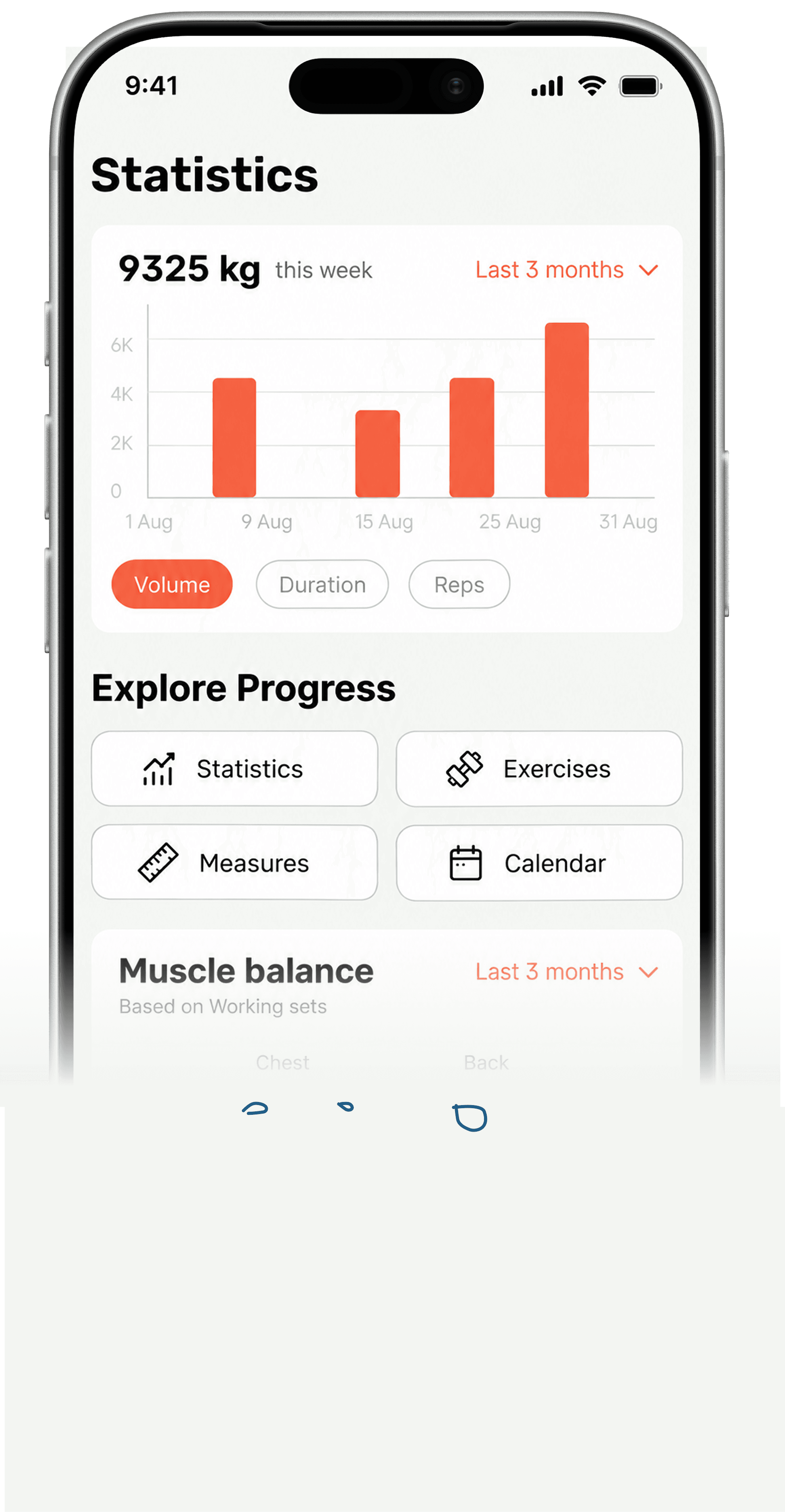
Compare sessions using the same exercise, technique, range of motion, and weight convention. More reps at the same load can be a useful change too.
Keep exercise variations and equipment consistent. A different machine or a shorter range can change the numbers without showing the same improvement.
Use a practical rep range. Build repeatable reps at a manageable load before considering the next weight increase.
Use notes to explain a different setup, harder effort, or shorter rest. A result is more useful when you know how it was achieved.
Review exercise charts, volume, and records together. One difficult session is different from a trend that continues across several workouts.
Choose a repeatable exercise variation and enter your actual working sets.
Use previous sets as a reference while keeping form and effort comparable.
Open progress and exercise history to see whether reps, load, or repeatable performance are changing.
For a chosen 6–8 rep range, the next step can be adding reps before increasing weight. The same idea works with other suitable rep ranges.
| Session | Load | Working-set reps | Observation |
|---|---|---|---|
| First | 20 kg | 7, 6, 6 | Establish a repeatable baseline |
| Later | 20 kg | 8, 8, 8 | Reach the top with consistent form |
| After a small increase | 22 kg | 6, 6, 6 | Build reps again at the new load |
An illustrative example, not a recommendation to use these weights or increase load on a fixed schedule. Changes in effort and technique affect the comparison.
Good to know
No. Progress can come from more repeatable reps at the same load or another appropriate change in training demand. Weight increases should match your exercise, equipment, and ability to keep control.
No. Volume can help describe training, but technique, range, effort, exercise selection, and recovery affect what the numbers mean. Compare more than one metric.
Track sets and reps, and record any added load or assistance. Keep the variation and range consistent. More controlled reps or less assistance can be useful changes.
Look across several comparable sessions. Review technique, recovery, rest, and your training plan before changing everything because of one workout.