Exercises Pull-Up

Pull-up bar exercise · Lats

Pull-Up

A bodyweight vertical pull that can progress through reps, added load, or less assistance.

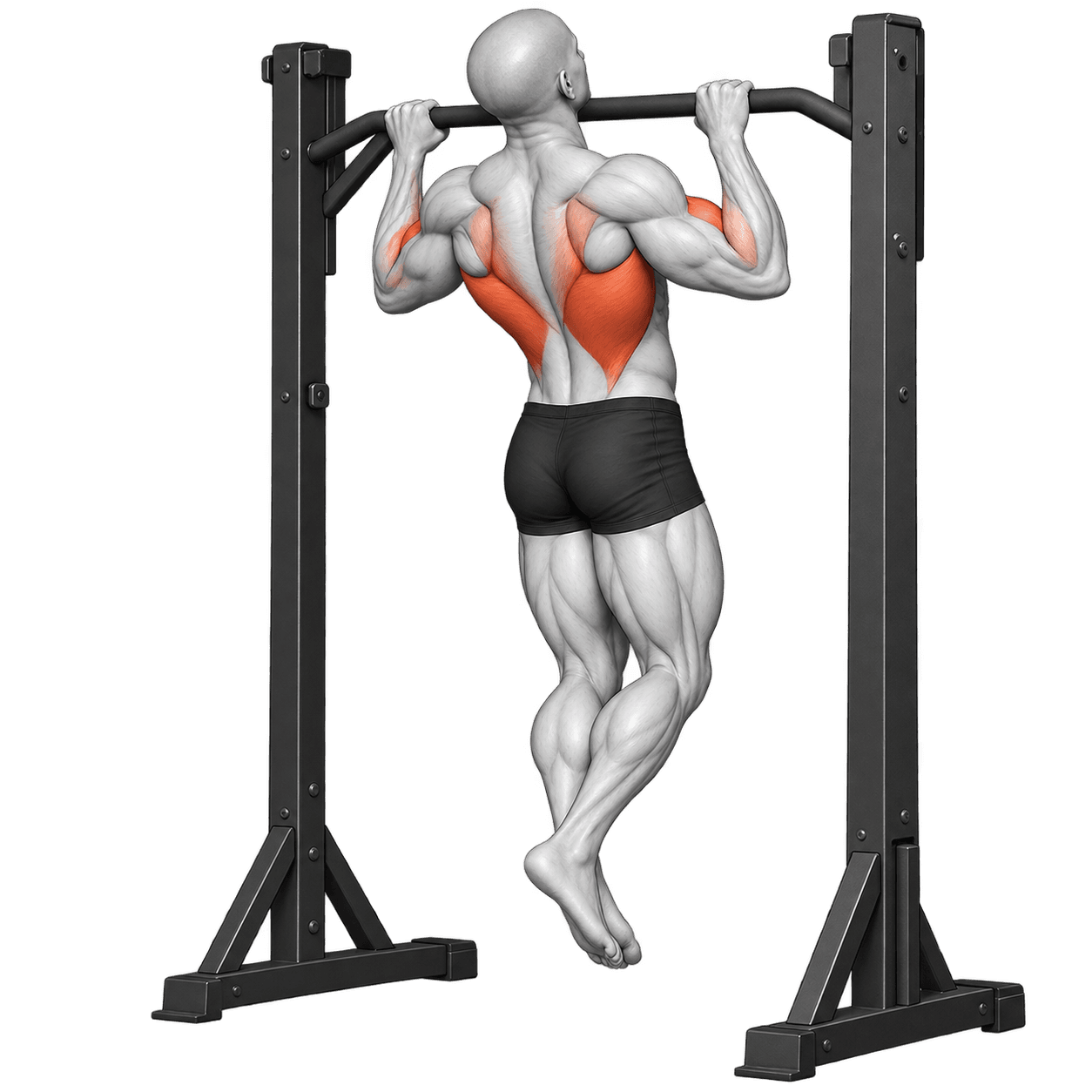
Bodyweight pull-up on a fixed bar with the back muscles highlighted
Pull-Up · exercise illustration
EquipmentPull-up bar
Primary muscleLats
Also worksBiceps · Upper back · Core

The movement

How to do a pull-up

Use a steady range and keep each rep controlled from start to finish.

  1. 01

    Take a secure grip

    Use a stable bar you can reach safely. Take a comfortable grip and begin from a controlled hang rather than jumping into the first repetition.

  2. 02

    Brace before pulling

    Keep your ribs and pelvis steady. Start the pull without swinging your legs or kicking to create momentum.

  3. 03

    Bring the elbows down

    Pull your body toward the bar, bringing your elbows toward your sides. Reach a repeatable top position without craning your neck.

  4. 04

    Lower to your starting range

    Return gradually to a comfortable hang. Keep shoulder control at the bottom and repeat the same range for each rep.

Muscles worked

Where the pull-up works.

PrimaryLats
SupportingBiceps · Upper back · Core

Form cues

Make every rep controlled.

  • Start from a controlled hang
  • Pull elbows toward your ribs
  • Keep the ribs stacked
  • Lower under control

What to watch for

Common mistakes

  • Kicking through difficult reps
  • Losing shoulder control at the bottom
  • Counting partial reps as full reps

Keep your options open

Alternatives and related exercises

Lat pulldownAssisted pull-upEccentric pull-up

Good to know

Pull-Up questions.

What if I cannot do a full pull-up yet?

Use an assisted pull-up machine, a suitable band, or lat pulldowns to practise controlled vertical pulling. Choose assistance that lets you repeat a comfortable range.

What is the difference between a pull-up and a chin-up?

A pull-up usually uses an overhand grip; a chin-up uses an underhand grip. Both train the back and arm muscles, with a different grip and shoulder position.

How do I track assisted pull-ups?

Record the reps and the assistance method consistently. On an assisted machine, less assistance at the same rep quality can be progress; do not treat its stack value as added weight.

When should I add weight to pull-ups?

Consider a small added load after you can repeat your chosen bodyweight rep range with stable form. Keep bodyweight, weighted, and assisted entries distinguishable.

Use the record

How to progress your pull-up

Choose a rep range suited to your routine and a load you can control. Build repeatable reps before considering the smallest practical load increase. Compare the same variation, range, and effort across sessions rather than forcing a heavier weight every workout.

Your next set

Put your progress in one place.

Log your workout, keep previous sets close, and see how your training changes over time.

Download on theApp Store