Exercises Lateral Raise

Dumbbells exercise · Side delts

Lateral Raise

A shoulder isolation exercise best progressed with controlled reps, stable form, and small load jumps.

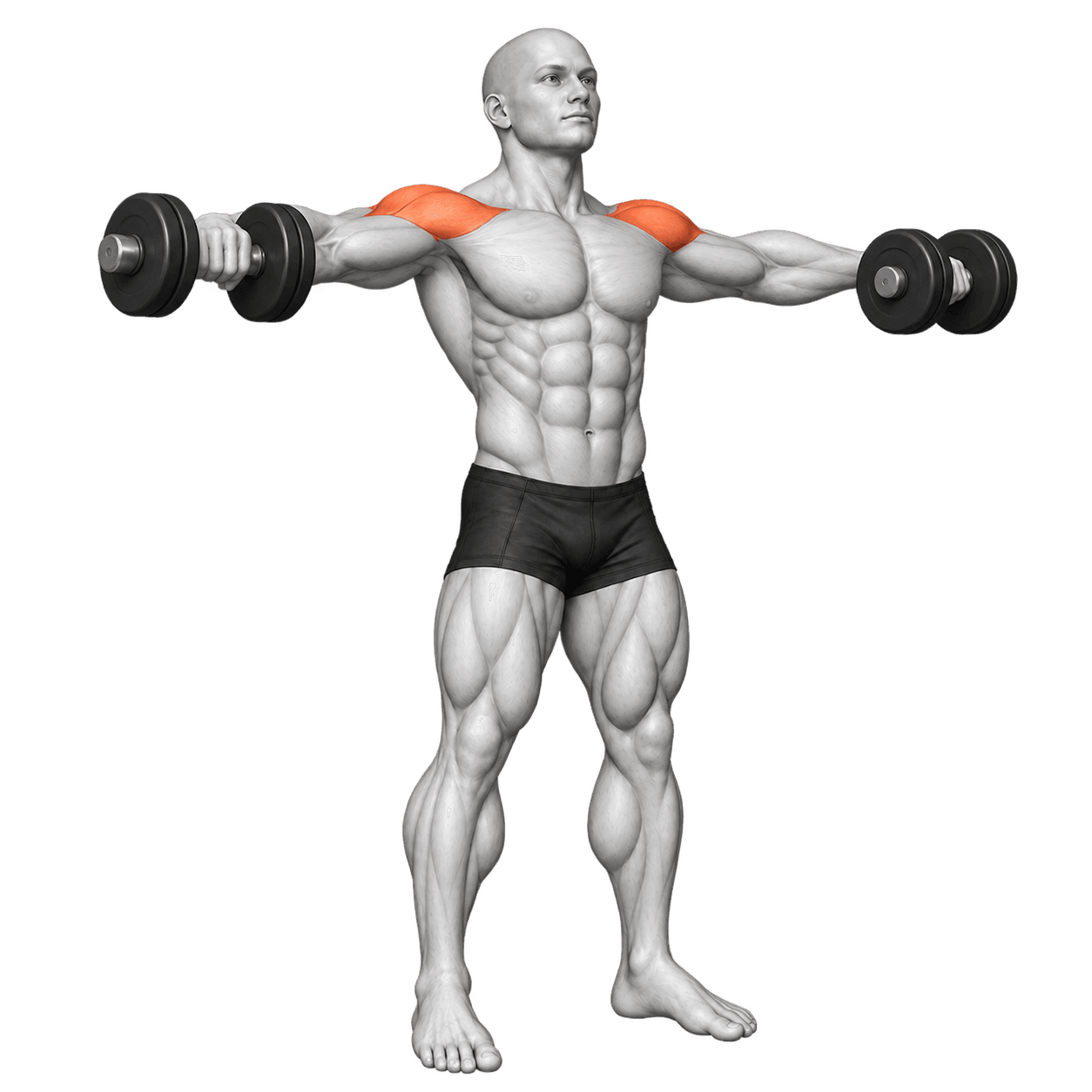
Standing dumbbell lateral raise with the side shoulders highlighted
Lateral Raise · exercise illustration
EquipmentDumbbells
Primary muscleSide delts
Also worksUpper traps

The movement

How to do a lateral raise

Use a steady range and keep each rep controlled from start to finish.

  1. 01

    Start with light dumbbells

    Stand steadily with the weights by your sides. Keep a small bend in the elbows and choose a load you can move without a hip swing.

  2. 02

    Raise out and slightly forward

    Lift the arms to the sides in a comfortable shoulder path. Keep your wrists steady and avoid making a forceful shrug to start.

  3. 03

    Control the top

    Raise toward shoulder height if comfortable, without forcing higher. Keep the elbow bend similar through the repetition.

  4. 04

    Lower smoothly

    Return the weights under control. Repeat the same range and stop when momentum begins to replace the movement.

Muscles worked

Where the lateral raise works.

PrimarySide delts
SupportingUpper traps

Form cues

Make every rep controlled.

  • Keep a soft bend in the elbows
  • Raise out and slightly forward
  • Pause near shoulder height
  • Lower more slowly than you lift

What to watch for

Common mistakes

  • Shrugging the weight up
  • Swinging from the hips
  • Using load jumps that cut the range

Keep your options open

Alternatives and related exercises

Cable lateral raiseMachine lateral raiseLean-away lateral raise

Good to know

Lateral Raise questions.

What muscles do lateral raises work?

They mainly target the side deltoids. Other shoulder and upper-back muscles help move and stabilize the arm.

Should I bend my elbows during lateral raises?

A soft bend is a practical default. Keep it similar across reps because changing the lever length changes the difficulty of the exercise.

Why do I feel lateral raises in my traps?

The upper traps contribute to arm elevation, but a large shrug or swing can dominate the rep. Try a lighter load and a controlled, comfortable shoulder path.

How do I progress when the next dumbbell is too heavy?

Add controlled reps within your chosen range first. If a larger weight jump shortens the range or adds momentum, stay with the lighter pair or use equipment with smaller increments.

Use the record

How to progress your lateral raise

Choose a rep range suited to your routine and a load you can control. Build repeatable reps before considering the smallest practical load increase. Compare the same variation, range, and effort across sessions rather than forcing a heavier weight every workout.

Your next set

Put your progress in one place.

Log your workout, keep previous sets close, and see how your training changes over time.

Download on theApp Store